




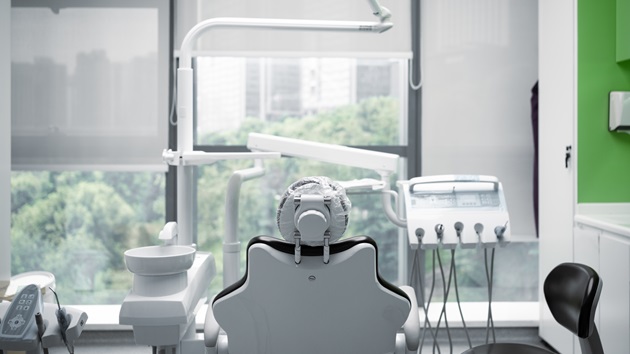
(PHILADELPHIA) -- Health officials in Philadelphia are recommending certain patients of a dental clinic accused of following "unsanitary practices" get tested for hepatitis and HIV due to potential exposures from April 2025 to May 2026, the city's Department of Public Health said in a statement this week.
Officials on Wednesday identified the dental clinic in Center City Philadelphia as Smiles at Rittenhouse Square, also called Smiles on the Square, and said it is now closed due to the dentist's temporary suspension.
James Garrow, Philadelphia's deputy health commissioner, told ABC News the risk is believed to be low to patients at this time because they have yet to identify any associated cases of hepatitis or HIV linked to this dentist office.
"We don't have any known reason to say that the risk will be potentially high, but the fact of the matter is, when you are in a dentist office that's unsanitary, unsafe, the risk always exists," Garrow said. "So that's why we're really pushing folks who are patients there to get tested and make sure."
The sole dentist practicing at this office has since had their license temporarily suspended, state records show.
"On May 15, 2026, the State Board of Dentistry suspended Dr. Kirti Chopra's professional license in Pennsylvania because her continued practice of dentistry presents a clear and immediate danger to public health and safety," a Pennsylvania Department of State official said in a statement to ABC News.
The alleged sanitary problems in the clinic were discovered during an unannounced site visit, the suspension order, reviewed by ABC News, said.
According to the order, the dentist allegedly admitted to investigators that used injectable medication vials were occasionally set aside for reuse on other patients and IV saline bags intended for single use were reused between patients.
Investigators said they identified multiple issues with sterilization and sanitation practices during the site visit that include finding dental instruments that were not properly sterile, handled with potentially contaminated gloves, and packaged in potentially contaminated pouches.
They also reported finding dental handpieces that came into contact with blood and saliva left attached to patient equipment after use that should be sterilized between patients.
The dentist's temporary suspension order concluded that these findings "place patients at risk for transmission of hepatitis C, hepatitis B, Human Immunodeficiency virus (HIV), as well as outbreaks of viral, bacterial or fungal infections."
Hepatitis viruses and HIV are spread through contact with infected blood or body fluids. Garrow said exposure at a dentist's office is "exceedingly rare" but it is possible to get infected if exposed through contaminated dental equipment.
"The fact of the matter is, if someone who is a patient there was exposed to one of these diseases... these are potentially life-changing chronic conditions," Garrow said.
Doctors tell ABC News potentially impacted patients may need multiple blood tests, depending on the timing of a potential exposure.
"If it's a recent exposure it would be a minimum of two or three blood draws to establish a baseline and then follow-up testing to determine seroconversion," Dr. George Diaz, a spokesperson for the Infectious Disease Society of America, told ABC News.
Doctors say hepatitis B is considered one of the more transmissible bloodborne viruses in healthcare settings when sterilization procedures aren't followed or if contaminated instruments are reused.
The hepatitis B vaccine offers the best line of protection for a person who is exposed to this virus.
"In this case, vaccination against Hepatitis B would be protective against exposures such as this," Diaz said. "Risk is virtually zero for those that are vaccinated."
There are no current vaccines to prevent HIV or hepatitis C. Treatment options vary for each virus, based on timing of exposure or infection.
According to Garrow, the health department is working to finalize a list of patients potentially at risk but due to the timeframe of potential exposure, he estimates that number "could be in the hundreds."
Garrow also said that there is another dental clinic in the same building with a similar name, Rittenhouse Smiles, that is not under investigation, and they are working on messaging to minimize patient confusion.
Officials say people who are unsure about potential exposure or patients of Smiles at Rittenhouse Square should call 215-685-5488, a hotline the health department set up that is open between 8:30 a.m. and 5 p.m. ET, Monday through Friday.
"Dr. Chopra is cooperating with the Department of Public Health and the Pennsylvania Department of State," a lawyer representing Chopra and Smiles at Rittenhouse Square said in a statement to 6ABC Philadelphia on Wednesday. "Dr. Chopra will continue working cooperatively with public-health officials regarding patient notification, testing recommendations, and any required infection-control remediation."
Mark Abdelmalek, MD is a medical contributor and investigative reporter for ABC News. Jade A. Cobern, MD, MPH, is a fellow of the ABC News Medical Unit.
Copyright © 2026, ABC Audio. All rights reserved.

.jpg)